In summary (click to jump to each section):
- Transformational leadership: How Fran’s decade-long tenue as Chairman and CEO of PPL revolutionised the organisation.
- Building trust with performers: Giving performers a voice for the first time through the creation of the Performers’ Forum.
- Legal and political victories: How Fran won a landmark case against the UK government that expanded PPL’s licensing capabilities.
- Global financial success: Enhancing international income collections, removing barriers that previously hindered payments to UK performers.
- Legacy and continuity: The introduction of the PPL Board and setting up future leaders.
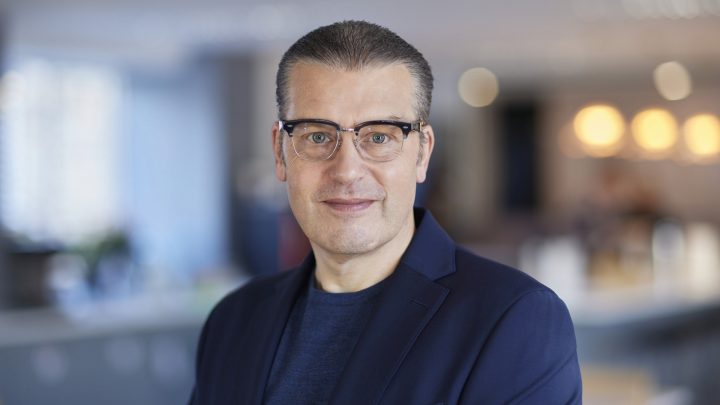
In his decade serving as both Chair and CEO, Fran Nevrkla OBE completely transformed the fortunes and standing of PPL, taking it from what he saw as a “dinosaur” to a modern, forward-looking entity with the backing of its members.
While distributions hit record highs under his tenure, arguably his greatest achievement was nurturing and cultivating a trusting relationship with performers who, thanks to his initiatives, gained a direct say in the running of the company for the first time.
Even though Fran faced countless challenges in trying to reshape the organisation he joined from Warner Music UK in October 2000, it was what he describes as his own “personal quiet campaign” to
win over the performer community where some of the hardest battles were fought. He highlights one difficult encounter in particular as he started out on his mission to establish a new relationship with performers when none had existed before. Fran recalls:
“Someone stopped me and said, ‘Let me tell you that it’s totally wrong and let me tell you how it’s going to fail. Firstly, they’ll start arguing among themselves. They will never agree. And then they will turn on you.’ I’ll never forget that.”
However, by this time, dealing with adversity had become second nature to Fran. His movielike life already included fleeing Cold War-era Czechoslovakia for London and then re-training to become a lawyer in the music industry when his remarkable career as a leading violinist was suddenly cut short by a debilitating injury that made playing impossible.
Thankfully, he did not face this new fight alone. By what he calls “pure luck”, he was able to count on the support of a close bond of allies, including then Musicians’ Union General Secretary (and now PPL Chair) John Smith, Glen Barnham of Equity, AURA Company Secretary Nigel Parker, PAMRA Chair Gerald Newson and celebrated record producer Robin Millar.
“Those were the people I contacted first by phone and my message was, ‘Guys, I have nothing to promise. I just want to do things very differently and I will reshape PPL. There’s no ifs or buts, but I want to do it with you guys around the same table with me. The only favour I ask you is to leave your old baggage in the anteroom. Don’t bring it with you to the table. I don’t want to hear endless stories of this happened.’ And I suppose they listened.”
Setting up the Performers’ Forum
Fran’s first move to bring in performers to PPL was setting up the Performers’ Forum, which launched an online and advertising campaign to track down musicians who were owed a share of millions of pounds of unpaid royalties.
“I thought, let’s not have a huge revolution. Let’s start with small steps and just see where it takes us.”
He continues: “I also did the rounds face to face with all the key record industry bosses privately, but telling them honestly what I wanted to do: reshape PPL, and build more recognition with the performers in, as opposed to outside, the tent. They all said, ‘Fran, if you can do that, fantastic.’ I didn’t have one dissenting voice from the senior figures in the industry. It was 100% rock solid support throughout,” he says.
Fran was only just getting into his stride. No doubt encouraged by the success of the Performers’ Forum, he then took the bold step for PPL to do something that no one in the music industry had done before – sue the UK government. It commenced legal action after the government failed to fully implement a European directive which meant that there were certain types of businesses that PPL could not license for playing recorded music, whereas the equivalent societies in mainland Europe could. It resulted in a resounding victory for PPL in the High Court and ultimately more outlets from where PPL could collect income on behalf of its performer and rightsholder members.
“David Pannick QC, now Lord David Pannick KC, was utterly brilliant. In the first round, David won 3-0. We won to such an extent the High Court ordered the government not just to cover their own legal costs, they also ordered them to repay PPL’s legal costs because David Pannick and his victory was so overwhelming that there was nowhere for the government to go.”
Fighting for copyright term extension on behalf of performers
Prior to suing the government, PPL had no real relationship with Westminster, but this newly foun public affairs strength would prove to be invaluable when the organisation played a central role in the UK industry’s campaign to secure copyright term extension for recorded music. After a long-fought battle, copyright term was ultimately extended from 50 to 70 years. As a former musician himself, Fran saw just how life-changing an extra 20 years of PPL payments could be for some performers.
“One of the most heart-warming letters I received was from a lovely old trumpet player, a British guy settled in South Africa and it said something like, ‘Dear Fran, I’m in receipt of your latest PPL cheque.’ This was early December before Christmas. ‘You probably have no idea how much this cheque means to me and my family. It means that we can have a decent Christmas as opposed to not.’
“You almost want to cry because these are the guys who, you know, maybe rheumatism has set in, the lips have lost their firmness and the breath is more difficult, and basically they can’t play music anymore. But that precious stream of PPL income, which can now last for an extra 20 years; frankly it’s like manna from heaven.”
Transforming international collections Under Fran’s leadership, PPL’s political dealings also included submitting an application to the Office of Fair Trading to integrate performer organisations PAMRA and AURA. The deal’s approval was the catalyst for PPL being able to collect what in 2021 alone was a record £94 million of international income. This meant there was now only one organisation collecting internationally for UK performers, rather than three, something Fran said overseas societies had used as an excuse not to pay up.
“All the overseas societies, in Europe even, kept saying, ‘Well, who do we pay? Is it this lot? That lot? Someone else?’ Then the performer agents stepped in. Those people were almost doing PPL’s job overseas,” he says.
“When I stepped in, the first chunk of overseas income was a miserable £5,000 and it’s now how many tens of millions? It’s a fortune. The only reason why the number is so big is that we
removed all the excuses for everyone.”
Welcoming performers to the PPL Board
Following the success of the Performers’ Forum, Fran extended the voice and representation of the performers within PPL even further, launching a Performer Board and the Annual Performer Meeting, while for the first time ever, performers and their representatives had seats on the main PPL Board.
“You could probably use the word revolutionary. No one would have expected that in the year 2000,” says Fran, who added former Culture Secretary Chris Smith into the organisation to help in his efforts to develop closer ties with the performers.
“He brought in absolute integrity, absolute respect and I said to myself, ‘When Chris speaks at the table, everybody shuts up.’ And he was always incredibly thoughtful, respectful, sensitive. He never spoke without having something pretty serious to say.”
Another notable name Fran added to PPL’s ranks was artist manager and record executive Keith Harris who was appointed to the new position of Director of Performer Affairs. “I thought that, in addition to the inclusion of senior performer representatives on the main PPL Board, the performers deserved someone inside PPL and that was my idea to create the so-called Director of Performer Affairs. Keith was someone who I knew would bring integrity, honesty, respect and calm consideration.”
Continuing Fran’s legacy
Fran stepped down as CEO at the end of 2011 when Peter Leathem succeeded him and continued as Chair until John Smith took up the role in 2016. John was one of the key supporters who helped Fran to forge new links with the performer community, while in Peter he is proud of someone who was a key part of his team and is taking the organisation to even greater heights, including with the performer community.
“Peter is a very good man,” he says. “He’s very intelligent, and incredibly hard-working just like me. We are both probably workaholics so I knew in my heart of hearts that he would not allow it to go wrong and that he would build on what I achieved and take it to the next level.”