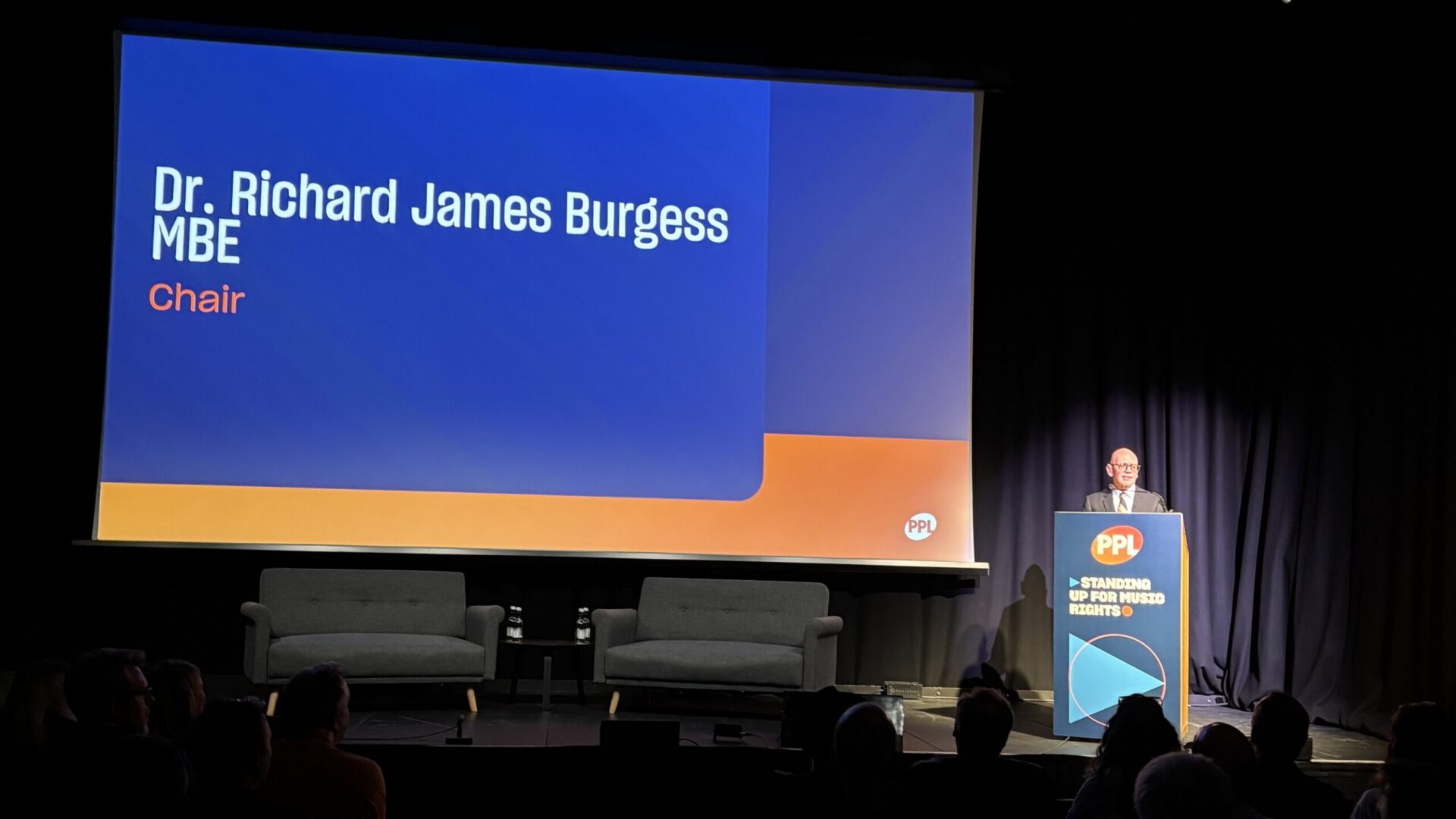
Welcome address from our new Chair
PPL Chair, Dr Richard James Burgess MBE, gave the opening address at the Annual General Meeting. Richard stepped into the role of PPL Chair at the start of this year, bringing decades of experience as an artist, producer and industry leader. He spoke about his purpose, his vision for PPL, and his reflections on the start of his tenure.
As Richard said, “Six months into the job, what has struck me most is the depth of expertise within this organisation, and the seriousness with which its responsibilities are taken.”
Another year of strong growth
2025 was another strong and resilient year for PPL, with revenues reaching £315.3 million, representing growth of 4.75%, or £14.3 million, on 2024 collections.
Chief Financial Officer, Anne-Marie Pearce, attributed this to “a mix of very strong international performance, alongside stable income from our core UK licensing activities across public performance and broadcast.”
She continued: “PPL revenues have continued to grow over recent years, despite ongoing economic uncertainty and sector-specific challenges. PPL has added over £100 million to collections in the past decade, delivering sustainable growth for its members in a demanding operating environment.”
Anne-Marie concluded by outlining the focus for the rest of 2026: driving sustainable revenue growth, strengthening PPL’s international position, and investing wisely in the systems and people that support its members.
Delivering for our members and customers
While PPL works to make it as frictionless as possible for members to interact with the organisation, it is equally conscious of its responsibility to protect their data.
As PPL Chief Membership & People Officer, Kate Reilly, put it: “We paid 182,000 performers and recording rightsholders last year, 16,000 of which received a payment from PPL for the first time. That scale matters. Every payment represents usage being identified, matched, validated and allocated, often across complex datasets and international systems.”
PPL deals with around 26,000 member queries a year, ranging from questions about the registration process to managing repertoire and completing tax forms. In 2025, the organisation improved its knowledge resources and increased the use of AI tools to support faster, more consistent responses to these common queries.
“Our members are all around the UK, and so are we. In 2025, we went to more than 25 towns and cities, some more than once, supported 26 awards, including all three national prizes in Wales, Scotland and Northern Ireland, delivered five PPL In Sessions, and hosted members at speed meetings, panels and masterclasses.”
Scaling PPL with data & technology
Chief Information Officer, Mark Douglas, gave an overview of the development of PPL’s core systems.
“When we first launched the systems that underpin our repertoire database, it held around four and a half million recordings. Today, it holds more than 33 million.”
PPL is now re‑engineering its technology and processes to meet increasing data volumes, improve efficiency, and deliver greater accuracy and transparency for members.
This work in 2026 has been undertaken within a tightly managed cost envelope. The team is now working on what the roadmap will look like for 2027 and 2028.
Mark summarised; “Our aim is to give members confidence that PPL can deliver accuracy, transparency and value at any scale the industry throws at us.”
20 years of international collections
PPL CEO, Peter Leathem OBE went into more detail on some of the levers that have been driving growth as set out by Anne-Marie, namely international collections and licensing revenue.
PPL marked 20 years of international collections by achieving its strongest collections to date, including its highest ever annual total for international rightsholder collections at £10.8 million.
PPL’s international growth was fuelled by an increase in newly represented performers, the development of new revenue streams, and operational improvements both at PPL and globally.
Since launching 20 years ago, PPL has collected over £1 billion in international revenue, and collections have almost doubled in the past decade.
Core licensing resilience
PPL’s joint venture with PRS for Music for public performance licensing is now eight years old and remains a strong engine for growth.
On the broadcast side, PPL is applying a sharp commercial focus to seeking out new routes to growth, executing assertively but fairly on what already exists, and exploring where it can broaden its licensing in the UK and internationally.
You can read Peter’s full speech here.
Formal business announcements
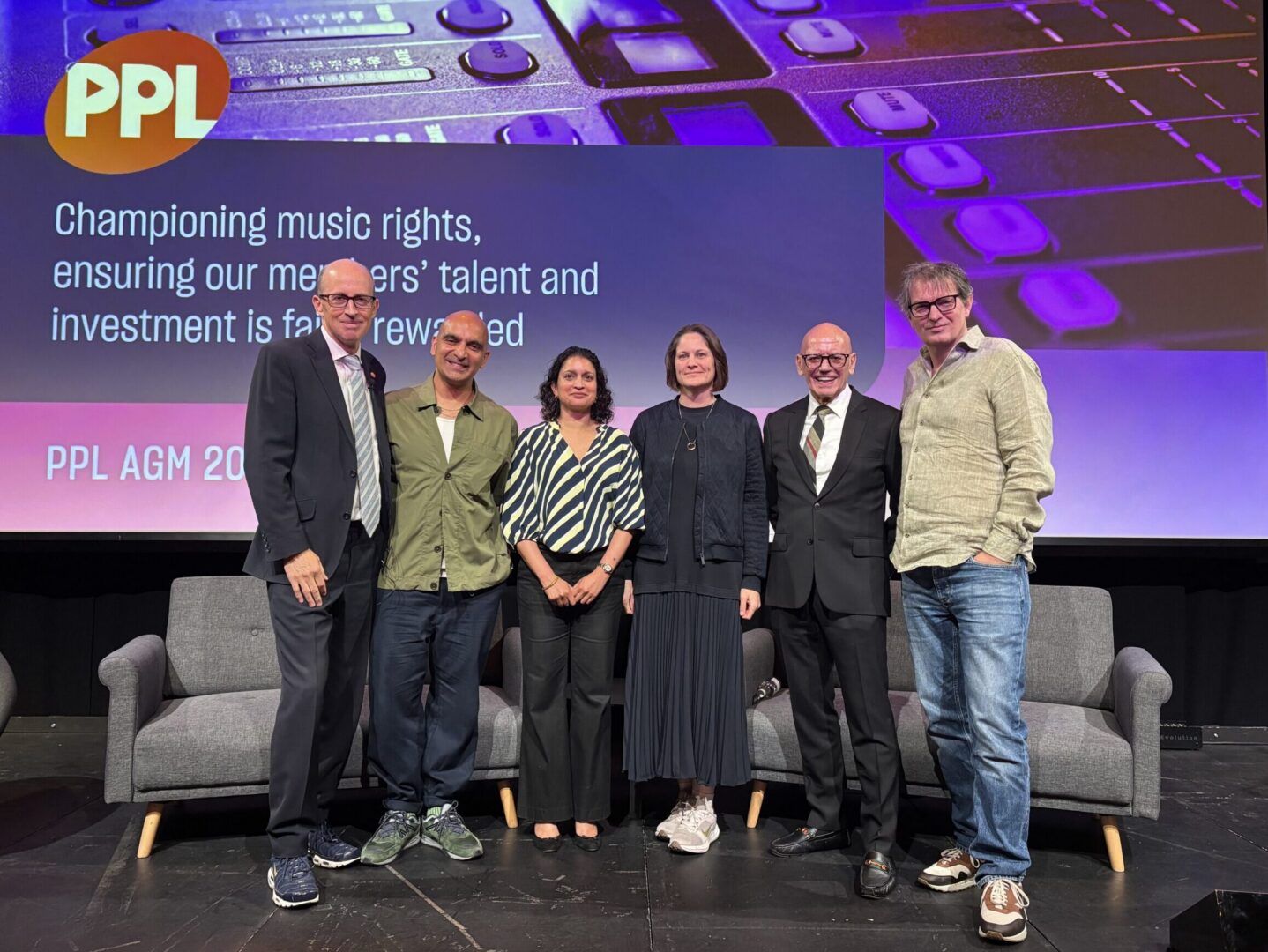
The meeting included the election of Soriya Clayton, Rob Gruschke, and Charlotte Saxe to the PPL Board of Directors, under Notice Item 1.
Under Notice Item 2, it was confirmed that the appointments of Dr Richard James Burgess MBE and Shamus Damani to the PPL Board have been duly ratified.
Funding payments to various music industry bodies, covered under Notice Items 3, 4 & 5, were all confirmed. These include:
- Payments to BPI, IFPI and other bodies for anti-piracy purposes;
- Payments to AIM and IMPALA; and
- Payments to UK Music
It was also confirmed that the Annual Transparency Report has been formally approved and that PPL’s auditors have been duly reappointed.
You can read more about PPL’s performance in the 2025 Annual Review.
Most played charts
The meeting closed with a look back at PPL’s Most Played charts from 2025.
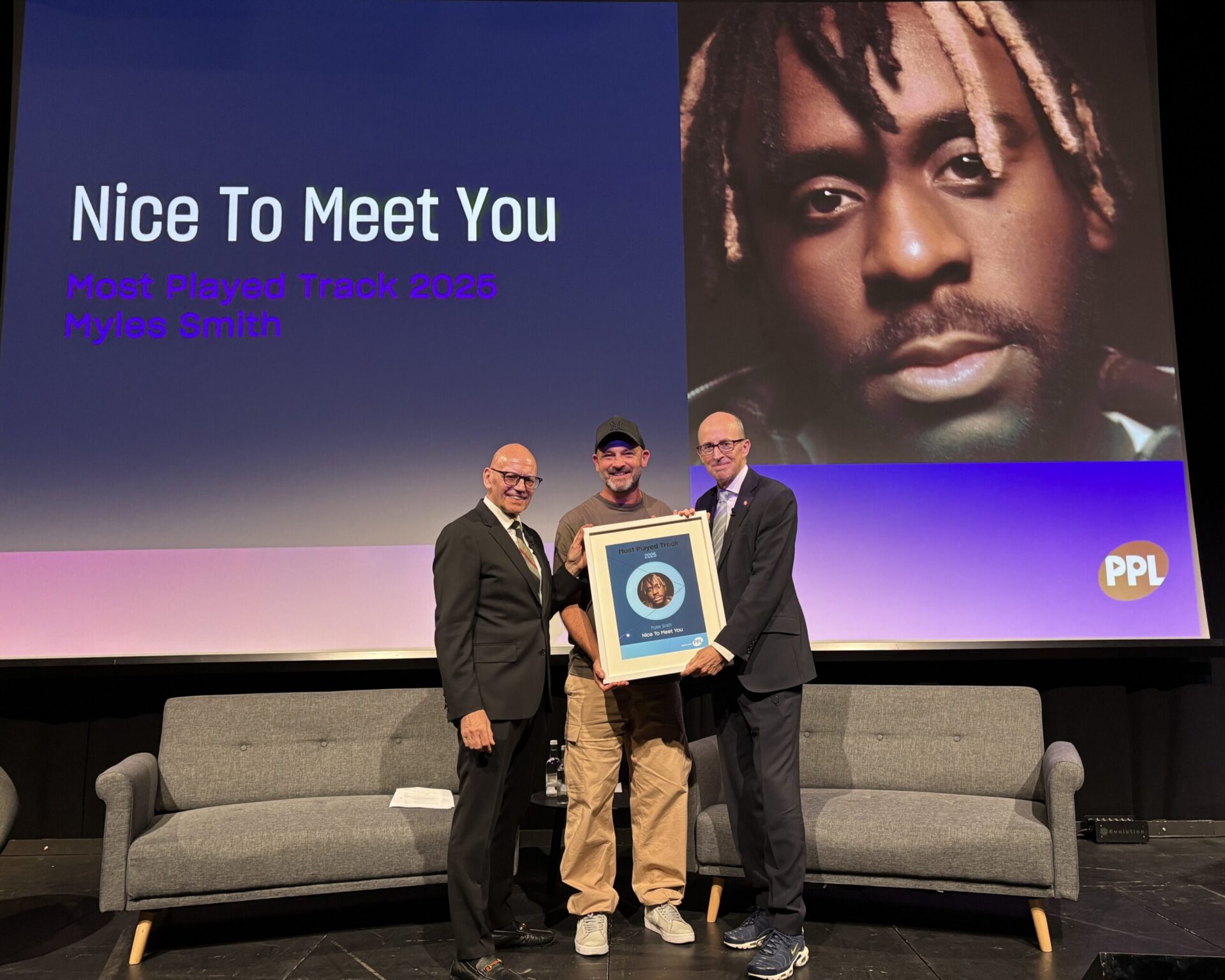
Ed Sheeran was named Most Played Artist for the eighth time in 11 years, while Myles Smith’s ‘Nice To Meet You’ was the Most Played Track across UK radio, TV and public places.
Damian Christian, MD and President of Promotions, Atlantic Records, accepted the award on behalf of Ed Sheeran, whilst Phil Youngman, Director of Promotions at RCA Records, accepted the award on behalf of Myles Smith.